Steam Meter Principle Selector
Choosing a steam flow meter is a decision about physics before it is a decision about brands: turndown, permanent pressure loss and tolerance for wet steam decide whether a vortex, thermal mass, Coriolis or pitot device can hold its accuracy across the load profile your line actually runs. Where an orifice flow meter is still the correct answer — very high temperature, large line size, differential-pressure infrastructure already in place — this guide says so plainly, and shows where a worn bore and blocked impulse lines quietly cost more than the hardware saved.
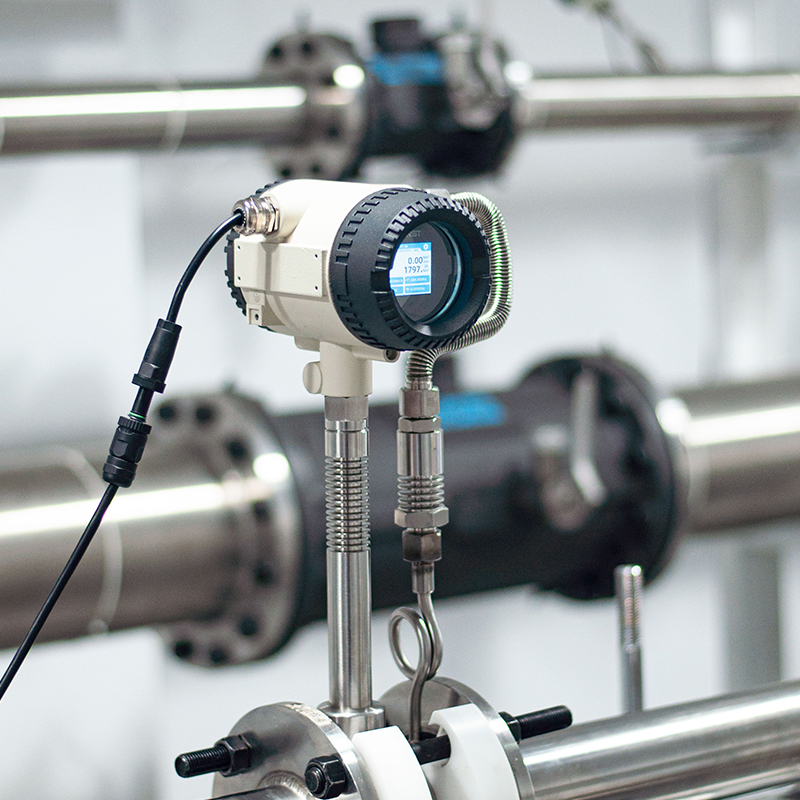
Three Jobs, Five Principles — the Job Picks the Meter
Almost every steam metering project is one of three jobs, and each job stresses a different part of the specification. Identify the job first and the shortlist narrows before you ever compare brands.
Custody transfer and billing
The number on the invoice has to survive scrutiny years later, so documented accuracy and a traceable calibration path matter more than turndown.
Energy sub-metering
You are allocating cost between buildings, departments or machines, and the profile spends as much time at 15% load as it does at 100%.
Process control
The signal feeds a controller rather than a ledger, so response time, pressure loss and sensor survival in a vibrating plant outrank everything else.
Five Principles on the Criteria That Decide the Purchase
Turndown, low-flow limit, permanent pressure loss, tolerance of wet and dirty media, straight-run demand and installed cost — the same nine columns for every principle.
| Principle | Turndown & low-flow limit | Stated accuracy | Permanent pressure loss | Moving parts | Wet / dirty media | Straight run | Integrated T & P | Relative installed cost |
|---|---|---|---|---|---|---|---|---|
| Orifice / DP | Limited by the transmitter span; the signal collapses at low flow | Set by bore, transmitter and installation; sized to ISO 5167 | High and permanent — energy is lost for the life of the installation | None in the plate; the transmitter diaphragm is the wear item | Impulse lines can block, freeze or trap condensate; carryover distorts the reading | Long upstream and downstream lengths per ISO 5167 | No — separate transmitters plus a flow computer | Low hardware, high installation and energy cost |
| VortexYUA F231x-VS | 1:53 published; low limit 1.5 m/s (gas / steam actual velocity), 0.15 m/s (liquid) | Class 1.0; repeatability ±0.2% RD | Low — unobstructed bore, no moving parts | None | No impulse lines to block; dual vortex sensor separates flow signal from vibration and electrical disturbance | Short — wafer-type body fits a compact run | Yes — pressure and temperature sensors integrated, compensation inside the meter | Mid — one line-mounted device replaces plate, transmitters and flow computer |
| Thermal mass | Very wide at low gas flow; not applied to steam service | Depends on calibration and gas composition | Very low — an insertion probe barely obstructs the line | None | Coating on the sensor drifts the reading; condensate is a problem | Moderate; needs a representative velocity profile at the insertion point | Temperature is integral to the method; pressure compensation must be added | Low to mid — a gas-phase instrument |
| Coriolis | Very wide; excellent at low mass flow | Highest of the five at principle level | Moderate to high, depending on tube design | Vibrating tubes, no bearings | Copes with two-phase and wet media better than DP; coating shifts tube balance | None required | Density and temperature derived from the tube; pressure usually separate | High, and rises steeply with line size |
| Pitot / averaging probe | Narrow — differential pressure falls with the square of velocity | Sensitive to velocity profile and insertion depth | Very low | None | Ports can block; needs clean, single-phase flow | Long, to establish a stable profile | No — external transmitters required | Lowest hardware cost for large ducts and stacks |
Only the vortex row carries manufacturer-published figures for the F231x-VS. The other rows describe principle-level behaviour — confirm any number against the individual supplier’s data sheet before you write it into a specification.
Where the Plate Still Wins, Where It Quietly Fails
A differential-pressure plate is the oldest answer in steam metering and still the right one on plenty of sites. The honest comparison is not plate versus vortex — it is plate versus the conditions the plate was never designed for.
Wins — keep the plate here
- Very high temperature A bare plate in a high-alloy holder puts no electronics near the pipe; the transmitters sit back on impulse lines where the heat has already dropped away.
- Large line size on a constrained budget Plate cost scales slowly with diameter, unlike a full-bore vortex or Coriolis body in the same DN.
- Existing DP infrastructure If transmitters, manifolds and a flow computer are already installed and maintained in-house, the marginal cost of one more plate is small.
- Standardised sizing ISO 5167 gives inspectors, auditors and contractors a familiar documented basis that needs no explanation.
- Familiarity on site Every contractor can install one and every maintenance team has the spares — a real advantage in a plant with limited instrument resources.
Fails — watch for these
- Low-flow dropout Differential pressure falls with the square of flow, so the usable flow range is far narrower than the transmitter’s span; the night minimum often drops off the bottom of the curve.
- Permanent pressure loss The plate deliberately throttles the line, and that unrecovered head is pumping energy paid for every hour the plant runs.
- Wet steam and dirt Condensate slugs and carryover distort the differential, while small impulse bores plug or freeze without announcing it.
- Bore wear and drift An eroded square edge changes the discharge coefficient, and nothing flags the change between calibrations.
The Vortex Row in Hardware: F231x-VS
The vortex row above is not a generic principle — it is a design brief, and the F231x-VS is the instrument built against it.
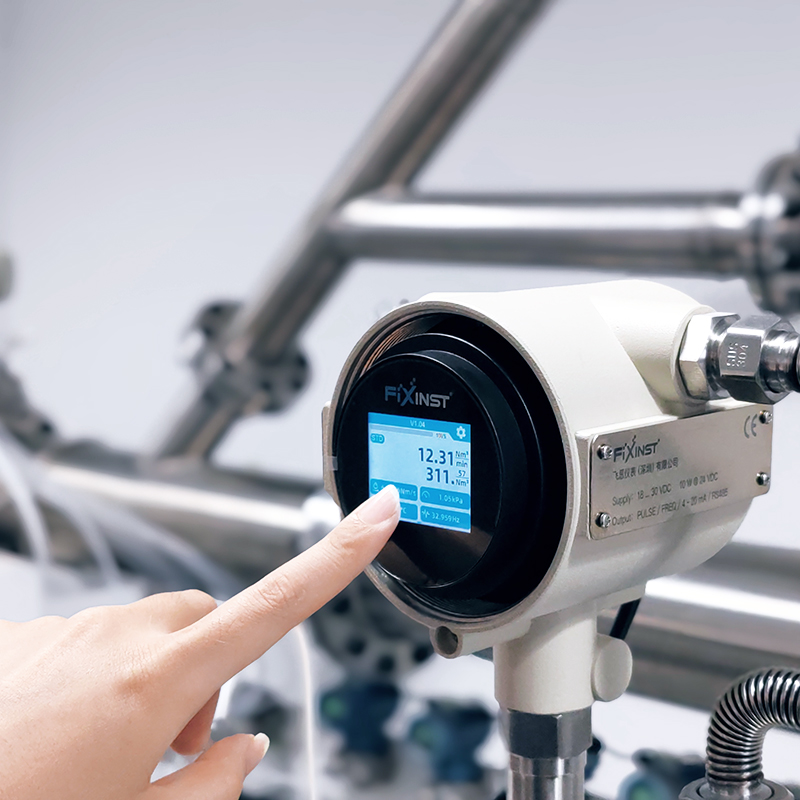
- Vibration gets separated, not averaged An ultra-high-sensitivity dual vortex sensor detects the flow signal and the interference signal simultaneously, and digital full-spectrum analysis (DSA) identifies flow, vibration and electromagnetic disturbance so the last two can be rejected.
- No impulse lines to plug A fully welded structure with a 304 / 316L main body and 316L vortex sensor leaves no small bores to freeze, trap condensate or collect carryover — the failure mode a DP plate cannot avoid.
- Compensation lives in the meter Integrated pressure and temperature sensors calculate compensated mass flow inside the instrument, so you do not need a separate flow computer to turn velocity into a billable quantity.
- Outputs that fit a control room 4…20 mA configurable to flow, temperature or pressure; frequency output for actual flow; pulse output for consumption or alarm; Modbus RTU on RS485 as standard with HART as an option; Bluetooth for wireless configuration and data transfer.
- Built for the plant floor A 2.0-inch IPS LCD with capacitive touch, IP67 protection and EMC to IEC 61326-1 keep the meter readable and reliable where it is actually installed.
F231x-VS Specification Summary
The configuration data you need before a quotation can be built — everything below is a selectable option or a published limit.
| Measuring medium | Gas / steam / liquid |
|---|---|
| Flow measuring range | 1.5 m/s … 80 m/s (gas and steam, actual velocity); 0.15 m/s … 8 m/s (liquid) |
| Turndown ratio | 1:53 |
| Accuracy / repeatability | Class 1.0; ±0.2% RD repeatability |
| Display | 2.0″ IPS LCD with capacitive touch |
| Analog output | 4…20 mA, configurable to flow rate, temperature or pressure |
| Frequency output | Actual flow rate |
| Pulse output | Consumption / alarm |
| Digital output | Modbus RTU (RS485) standard; HART option |
| Wireless communication | Bluetooth; Wi-SUN / IOT-4G option (choose one of the two) |
| Pressure measuring range | 0 … 1.7 MPa(a) standard; 6.3 MPa(a) option — accuracy ±0.5% FS |
| Temperature measuring range | -40 … +160 °C standard; -40 … +280 °C mid; -40 … +350 °C high; -180 … +40 °C low — accuracy ±0.5 °C (±1.0% FS above 100 °C) |
| Reference condition | 20 °C, 1 bar(a) — ISO 1217 (configurable) |
| Environment | Temperature -40 … +85 °C; humidity 0 … 95 %RH |
| Explosion-proof class | Ex db IIC T6 Gb / Ex tb IIIC T80°C Db |
| Protection code | IP67 |
| Power supply | 18 … 30 VDC, 10 W @ 24 VDC |
| Process connection | Wafer-type / flange-type |
| Materials | Main body 304 / 316L; vortex sensor 316L; housing aluminium or stainless steel |
| EMC | Compliant with IEC 61326-1 |
From Line Data to a Configured Meter
Six decisions turn a line description into an orderable instrument. Work through them in order — each one closes an option on the configuration.
Fluid and phase
Saturated steam, superheated steam, gas or liquid. This decides which flow range applies: 1.5 … 80 m/s for gas and steam at actual velocity, or 0.15 … 8 m/s for liquid.
Line size and process connection
Nominal diameter and flange standard decide whether a wafer-type or flange-type body is supplied, and whether the straight run you have available is enough.
Pressure and temperature at the meter
Sets the pressure sensor range (0 … 1.7 MPa(a) or the 6.3 MPa(a) option) and the temperature build — standard to +160 °C, mid to +280 °C, high to +350 °C, or the low-temperature version.
Output and protocol
4…20 mA, frequency, pulse and Modbus RTU on RS485 are standard; HART is an option. Bluetooth handles local configuration and data transfer, with Wi-SUN or IOT-4G available as an alternative.
Area classification and power
The Ex db IIC T6 Gb / Ex tb IIIC T80°C Db certification and IP67 rating cover the zone question; the site supply must deliver 18 … 30 VDC at roughly 10 W.
Materials and housing
Body in 304 or 316L, vortex sensor in 316L, meter housing in aluminium or stainless steel — the choice follows the environment, not the flow rate.
Send the Line Data, Get a Configured Quotation
A quotation is only as good as the data behind it. Send these six items and the reply comes back as a configured instrument rather than a catalogue number.
- Fluid and phase — saturated steam, superheated steam, gas or liquid
- Nominal line size and flange standard
- Normal and maximum flow, in the unit your plant already uses
- Operating pressure and temperature at the meter
- Hazardous-area classification and available supply voltage
- Required output, protocol and any wireless option
Optional builds — the 6.3 MPa(a) pressure range, HART, Wi-SUN or IOT-4G, and the mid- and high-temperature sensor versions — are quoted per configuration. The quick guide, leaflet and installation manual for the F231x-V series are available on request.
Related Products
Keep adjacent product options together for a faster catalog comparison.
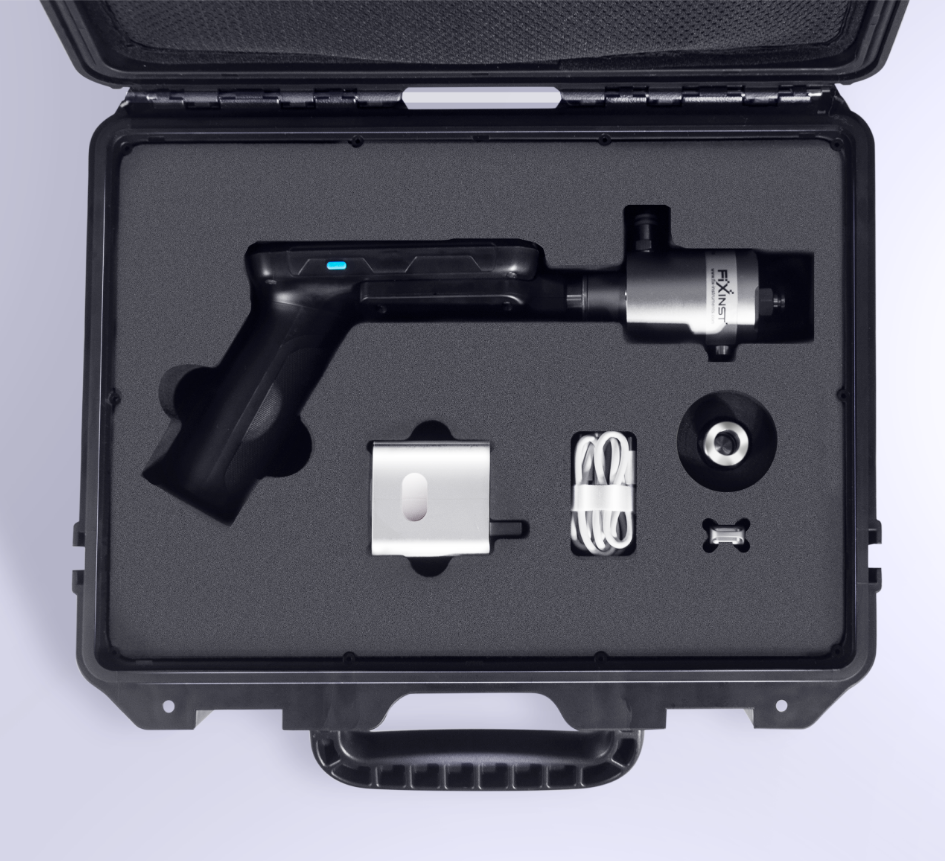
F305x Handheld Dewpoint Meter
F305x handheld dew point meter measures dew point from -110 to +60 °Ctd with data analysis and recording for accurate on-site gas inspection.
View product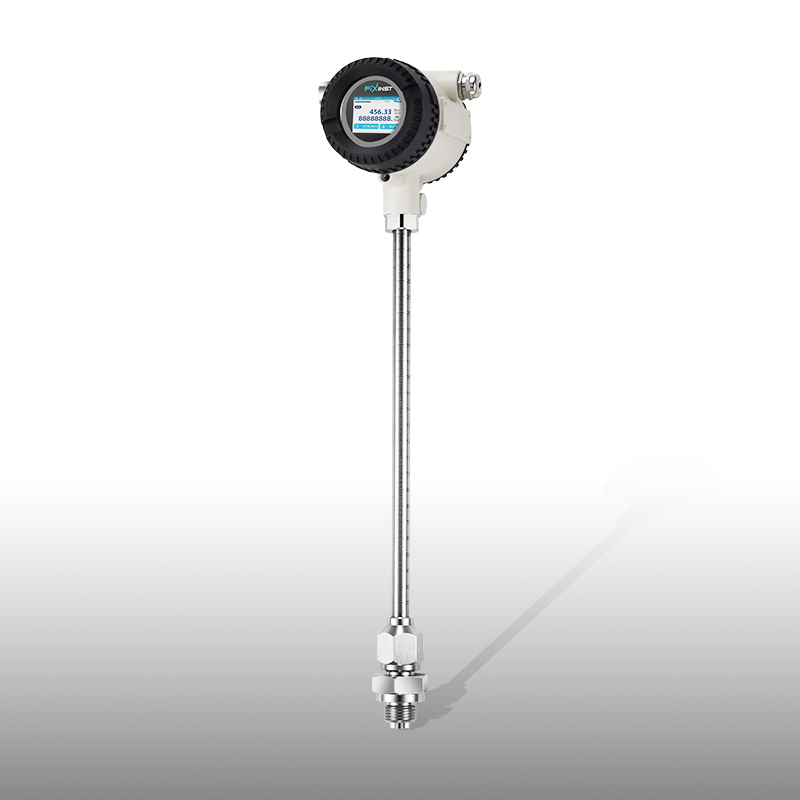
F211x-EX insert type explosion proof thermal mass flow meter
F211x-Ex insertion thermal mass flow meter provides accurate gas flow measurement with a 1:2500 turndown ratio, explosion-proof design and IP67 protection.
View product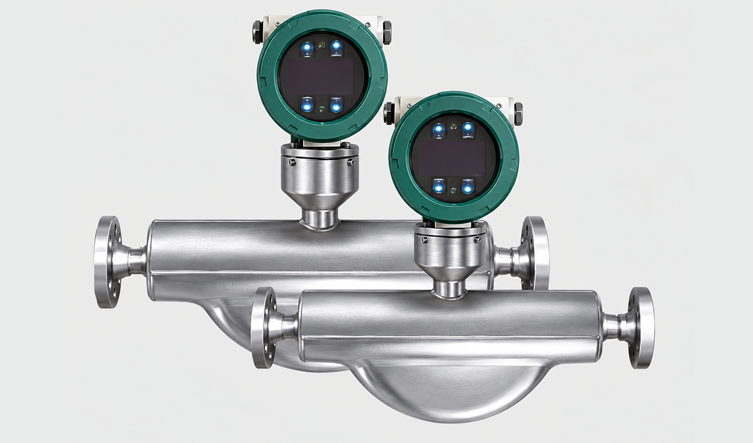
C Series Coriolis Mass Flowmeters
Discover the C-Series Coriolis mass flow meter with better than 0.1% accuracy for measuring mass flow, density, temperature and concentration.
View productFrequently Asked Questions
What information is shown for this product?
Review the product details, images, and specifications presented on the official product page.
Where can I check the intended application?
Use the application and use-case information published on the official product page.
Which specifications should I confirm before ordering?
Confirm the specifications and options listed for the exact product variant before placing an order.
Where can I check available options?
Check the official product page or ask the supplier about options shown for the selected product.
How can I request product information?
Use the official contact or inquiry path provided on the site.
What should I include in an inquiry?
Include the product page, intended use, required quantity, and any specifications you need the supplier to review.