
Compressed Air Quality Testing
Real-Time Data for Reliable Monitoring and Ensuring Clean, Safe Compressed Air
Compressed air is used in many industrial and commercial applications. It powers pneumatic tools and supports various processes. A clean and reliable air supply is essential to ensure safe and efficient operation. Compressed air can contain contaminants such as water, oil and particles. These can lead to equipment failure, product defects and process interruptions. That is why testing compressed air quality and purity is important.
There are different measuring tools available to monitor the air quality. Dew point sensors detect humidity, laser particle counters measure particles in the air, and oil vapor sensors check for oil content. These instruments provide accurate and reliable readings. They help operators maintain control over the system and ensure consistent air quality.
Selecting the right testing equipment for each application is necessary. Proper installation and regular monitoring support efficient system operation and help prevent problems before they occur.
1. Compressed Air Contaminants
Compressed air is a widely used source of energy, but it is susceptible to various types of contamination.
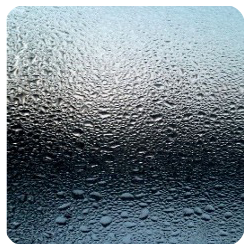
Moisture
Leads to corrosion and equipment damage. Effective moisture separators and desiccant dryers are crucial for optimal air quality.

Hydrocarbons
Originating from lubricants, they can compromise air quality. Regular monitoring and filtration are vital.

Pollen & Dust
Airborne particles can cause blockages and reduced efficiency. Dedicated filters prevent their entry.
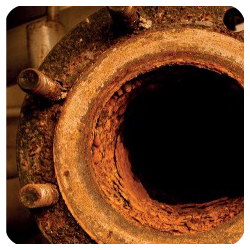
Rust
Originating from corroded components, rust poses a threat. Regular checks and filtration prevent rust-related issues.
2. Sources of Contamination
Contamination in a compressed air system can come from various sources, including
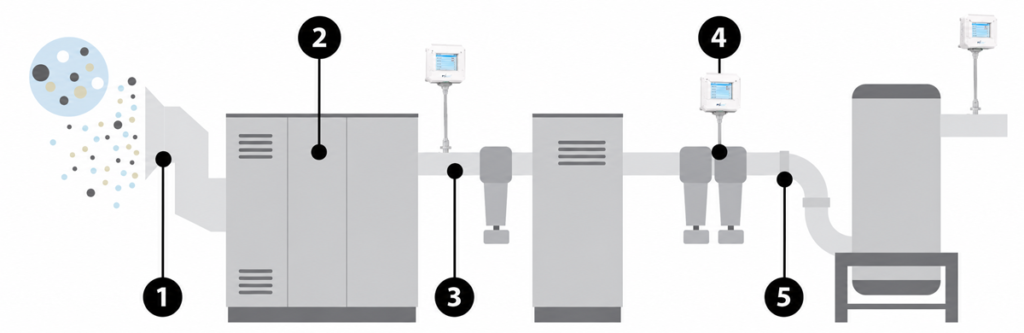
1. Air Intake
Air drawn from the environment and compressed can contain dust, particles and other contaminants.
2. Compressor
The compressor itself can produce contaminants such as oil mist, carbon particles and other debris.
3. Piping and Fittings
If the compressed air system is not properly maintained, rust, scale and other deposits can build up in the piping and fittings, which can contribute to contamination of the air.
4. Dryers and Filters
If the compressed air system includes equipment such as filters and dryers that are not properly maintained, they can become clogged and ineffective at removing contaminants from the air.
5. Air leaks
Leaks in the system can allow outside air and contaminants to enter the compressed air lines.
3. The Importance of Compressed Air Quality Testing
Compressed air quality testing is essential to ensure regulatory compliance, maintain product quality, address problems promptly, achieve energy efficiency, cost-effectiveness, real-time monitoring and improve workplace safety.


Safety
Ensuring contamination-free air for equipment and personnel safety.
Product Integrity
Vital in industries like food and pharmaceuticals to prevent product contamination.
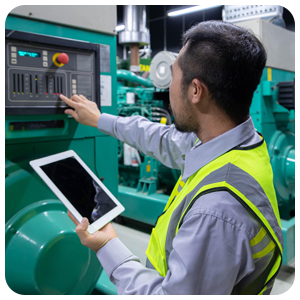
Issue Prevention
Early detection and resolution of potential problems to minimize downtime.
Monitoring
Providing real-time insights for accurate measurement and control
Efficiency
Identifying and fixing inefficiencies, like leaks, for energy savings.
Cost-Effective
Extending equipment life and reducing operational downtime.
4. In Accordance With The ISO 8573-1
YUA Instruments’ compressed air quality monitoring solutions deliver reliable measurements of moisture, oil vapor, particles, pressure, and flow. Designed to support compressed air quality assessment in accordance with ISO 8573-1, our solutions help customers understand air purity, protect equipment, improve product quality, and enhance operational reliability across industrial applications.
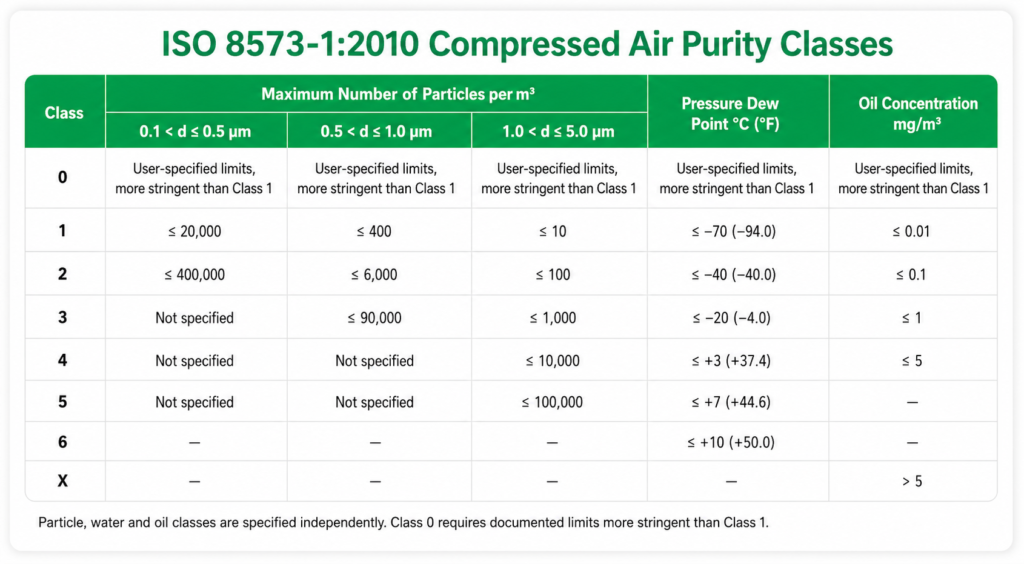
ISO8573-1:2010 is the most important publication in the ISO8573 series of standards because it specifies the allowable amount of contaminants per cubic meter of compressed air.
When air or compressed air is classified, it is done by defining a specific maximum level of contaminants that the air can contain. Particles, water and oil are considered contaminants. Each class has a defined maximum value for these three substances. The classes range from 0 to 9. The required cleanliness decreases as the class number increases. Class 0 can be defined by the equipment user, but is subject to stricter requirements than Class 1.
5.YUA Instruments Compressed Air Quality Testing Equipment
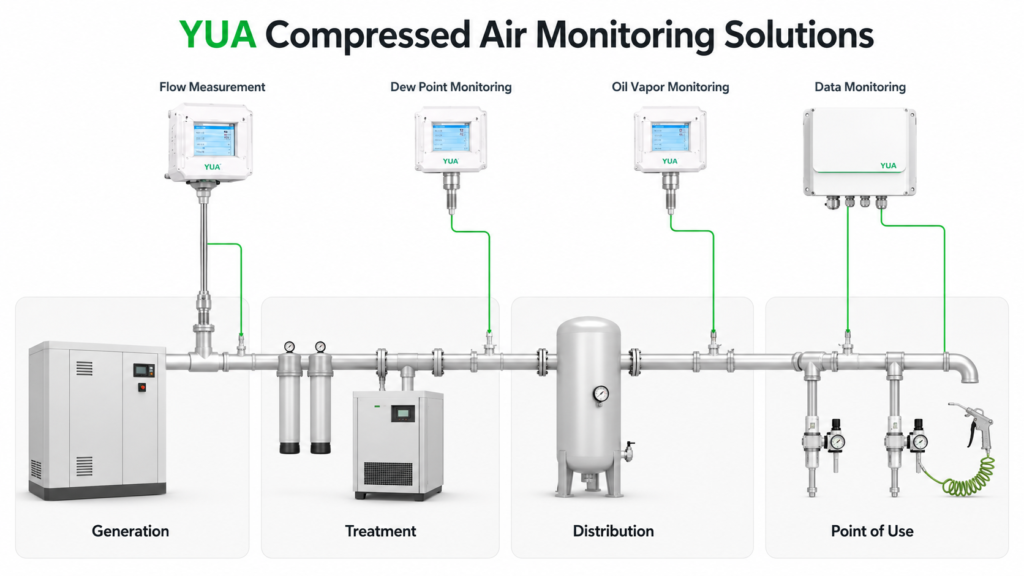
YUA Instruments provides a range of compressed air quality testing instruments for both continuous monitoring and temporary on-site measurement at the point of use. From integrated solutions for monitoring multiple contaminants to dedicated instruments for oil vapor, particles, and dew point, our team can help you select the most suitable equipment for your application requirements.
6. Technologies used in Compressed Air Quality Instruments
Particle Concentration Measurement
- Measurement methods according to ISO 8573-4 standards (together with isokinetic sampling device)
- Latest laser detection technology
- Smallest particle size 50 % per ISO 21501-4, bigger sizes 100 % per ISO 21501-4
Dew Point Measurement
- Large ranges due to the unique multiple sensor technology
- Long-term stable and well-proven measurement methods
- High precision with an accuracy of ±2 °C Td
Measuring Range: -100 … +20 °C Td
Oil Vapor Measurement
- Latest photoionization detector (PID) with self-calibration
- Measuring range according to ISO 8573-1 Class 1 to Class 5
- High precision with 5 % of reading ± 0.003 mg/m³ accuracy
Measuring Range: 0.001… 5.000 mg/m³
Pressure Measurement
- State-of-the art sensor technology
- Additional quality data about the compressed air system
Measuring Range: 0.1 … 1.6 MPa(g)
Integrated Data Logger
- Integrated data logger records all channels in parallel for later analysis
- 5’’ touchscreen allows you to interact with the device on site. There is no need for a PC to manage the device.
PDF Report Function
- On-Site PDF
- Customized Data Entry: Input customer details and service provider information directly on-screen for tailored reports.
- Simplified Audits: Streamline audits with on-site data entry, saving time and ensuring accuracy.
7. Real-time Confidence in Compressed Air Quality
- Precise Measurement: YUA Instruments provides accurate and reliable measurement data to help users assess and maintain compressed air quality.
- Real-Time Monitoring: Our instruments deliver real-time measurement data, allowing operators to identify changes promptly and take appropriate action.
- Quality Assurance: Reliable on-site measurements support compressed air quality assessment and help users manage their systems according to applicable industry requirements.
- Application Versatility: Our solutions are suitable for a wide range of applications, including industrial manufacturing, food and beverage, electronics, pharmaceuticals, and other critical processes.
- Cost-Effective Operation: Early detection of moisture, oil vapor, flow abnormalities, and other potential issues helps reduce energy waste, prevent equipment damage, and minimize costly downtime.